

How to Train Dog Recall That Works Anywhere
- Cherrie Kaminsky
- 11 minutes ago
- 6 min read
Your dog slips through the front door, spots a squirrel across the park, or catches the scent of something far more exciting than you. In that moment, “come” cannot be a suggestion. Learning how to train dog recall gives your furry friend more freedom while giving you the control and peace of mind every owner deserves.
A dependable recall is not built by repeating a command louder and louder while your dog ignores you. It is built through clear communication, good timing, consistent accountability, and practice that gradually prepares your dog for real life. Whether you have a wild little fur tornado of a puppy or an adult dog with a history of running away, the process starts by making coming to you the best decision they can make.
Start Recall Where Your Dog Can Win
Do not begin recall training at a busy park, around unfamiliar dogs, or in a backyard full of wildlife. Start inside your home or in a quiet, enclosed area where distractions are low. Your dog needs to understand the command before you ask them to perform it under pressure.
Choose one recall word and keep it consistent. “Come,” “here,” or your dog’s name followed by “come” can work well. What matters is that everyone in the household uses the same word and follows through the same way. If one person says “come,” another says “come here,” and a third shouts the dog’s name five times, the message gets muddy fast.
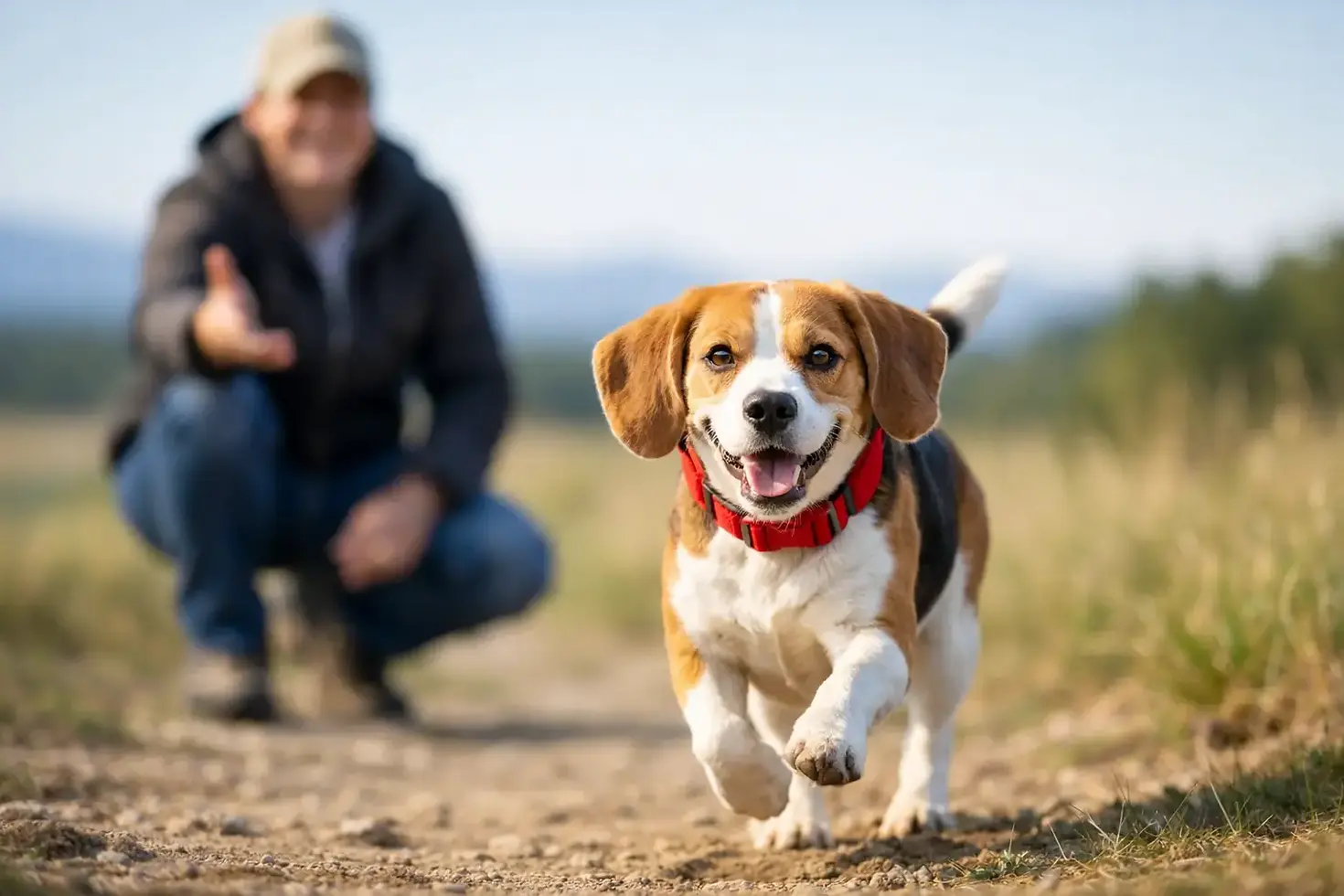
Say the command once in an upbeat, confident voice. Then move backward a few steps, clap lightly, or make yourself inviting. The second your dog turns toward you, praise them. When they reach you, reward them immediately with something they truly value, such as food, a favorite toy, affection, or a quick game.
At this stage, keep sessions short. Five successful repetitions are more valuable than 20 sloppy ones. End while your dog is engaged and excited to play again.
Build a Reward History Your Dog Believes In
Dogs repeat behavior that pays off. If coming when called regularly leads to a treat, praise, play, or a chance to go right back to having fun, recall becomes worthwhile. If it only means the leash comes on, the fun ends, or they get scolded, your dog will start doing the math.
Use high-value rewards when you are teaching a new level of difficulty. Regular kibble may be enough in the kitchen, but it may not compete with birds, other dogs, or an interesting smell outdoors. Small pieces of soft treats, a favorite tug toy, or enthusiastic praise can help you stand out when distractions rise.
This does not mean you must carry a pocket full of treats forever. Food is a teaching tool, not a lifelong bribe. Once your dog understands the command and responds reliably, vary the reward. Sometimes offer a treat, sometimes give praise and release them back to play, and sometimes reward with a game of fetch. The goal is a dog that responds because recall has a strong history of good outcomes and because the command is non-negotiable.
One helpful exercise is the “catch and release.” Call your dog, reward them when they arrive, gently hold their collar for a second, then release them to continue sniffing or playing. This teaches your dog that coming close to you does not always end their freedom.
How to Train Dog Recall With Distance
Once your dog is responding indoors, add distance a little at a time. Call them from across the room, then from another room, then from the backyard. If they hesitate, you moved too quickly. Make the next repetition easier, help them succeed, and build back up.
A long line is one of the best tools for this phase. A 15- to 30-foot training line allows your dog to explore while you maintain safety and control. It is especially useful for dogs that have practiced ignoring people, chasing wildlife, or taking off when excited. Never attach a long line to a retractable leash or use it in an area where it can tangle around people, dogs, or obstacles.
Let your dog sniff and move naturally. Then call them once. If they turn and come, celebrate the win. If they pause or ignore you, do not repeat the command over and over. Use the line calmly to guide them toward you, then reward when they arrive. The lesson is simple: the command means come every time, and coming to you is always worth it.
Avoid turning recall into a chase. Running after a dog can feel like a fun game, especially for young or high-energy dogs. Instead, move away from them, get low, use an encouraging tone, and guide with the long line if needed. Make yourself more interesting than the environment without creating frantic chaos.
Add Distractions in Small, Honest Steps
Reliable recall is earned through proofing. Your dog may come beautifully in the living room and struggle the first time a neighbor walks by. That is normal. Dogs do not automatically understand that a command means the same thing in every location, around every distraction, and at every distance.
Change only one challenge at a time. You might practice in a new place with no distractions, then add distance, then add mild distractions. Ask a family member to walk by, place a toy on the ground, or practice near a calm dog at a safe distance. If your dog cannot respond, create more space or reduce the challenge.
Busy New Orleans-area walks can bring sudden noise, people, dogs, and tempting smells. That is exactly why real-world practice matters. But safety comes first. Keep your dog on a leash or long line until their recall has been proven repeatedly in controlled settings. Off-leash freedom is earned through dependable behavior, not hoped for because your dog is friendly.
Do Not Poison Your Recall Command
A recall word should never predict punishment. If your dog finally comes after ignoring you, resist the urge to lecture, grab roughly, or show frustration. Correcting the delay may feel justified, but it teaches your dog that reaching you is unpleasant.
Instead, calmly secure your dog, reward the arrival, and make a plan to train at an easier level next time. Accountability belongs in the training process, through clear boundaries and follow-through, not through making the finish line scary.
Also, avoid using your recall command only when something your dog dislikes is about to happen. If you need to end park time, call your dog, reward them, clip the leash on, walk a few steps, and if safe, release them again. A few catch-and-release repetitions protect the value of your command.
Create an Emergency Recall
An emergency recall is a special word or sound reserved for urgent situations, such as a dog heading toward traffic or slipping out of a gate. Pick something you would not normally say, like “now!” or a unique whistle pattern. Then pair it with an extraordinary reward every single time.
Practice this sparingly in safe settings. Say the emergency cue once, then deliver a jackpot reward when your dog reaches you. Think several treats in a row, a favorite toy, and big praise. Because this cue is rare and always pays well, it can become a powerful backup when you need your dog’s attention immediately.
When Recall Needs Professional Help
Some dogs need more than backyard practice. A dog with strong prey drive, severe anxiety, reactivity, aggression, or a long history of escaping may not be ready for off-leash work without structured professional guidance. The same is true for owners who feel physically unable to manage a large dog on a long line or who need reliable behavior around public distractions.
At Top Dog Training Academy, recall is taught as part of a bigger picture: focus, leash manners, impulse control, place work, and real-world responsiveness. A dog that understands boundaries and looks to their handler for direction is better prepared to make good choices when excitement hits.
Every successful recall is a small promise kept between you and your dog. Practice it with purpose, reward it generously while they are learning, and do not ask for more than your dog is ready to deliver. With consistency, your dog can learn that no matter what is happening around them, coming back to you is always the right move.

Comments